No. 01Workday Learning, powered by SanaCase study
Bringing Sana’s AI-native learning into Workday Learning, as one product
The call
Decide what to keep from each product, and how the two connect, so learners, creators and admins get one experience rather than two products side by side.
After Workday acquired Sana, I led designers from both products to bring Sana Learn and Workday Learning together as one AI-native learning experience.
- Role
- Product Design Manager
- Team
- Designers across the Workday Learning and Sana Learn teams, with product, engineering and solution architecture
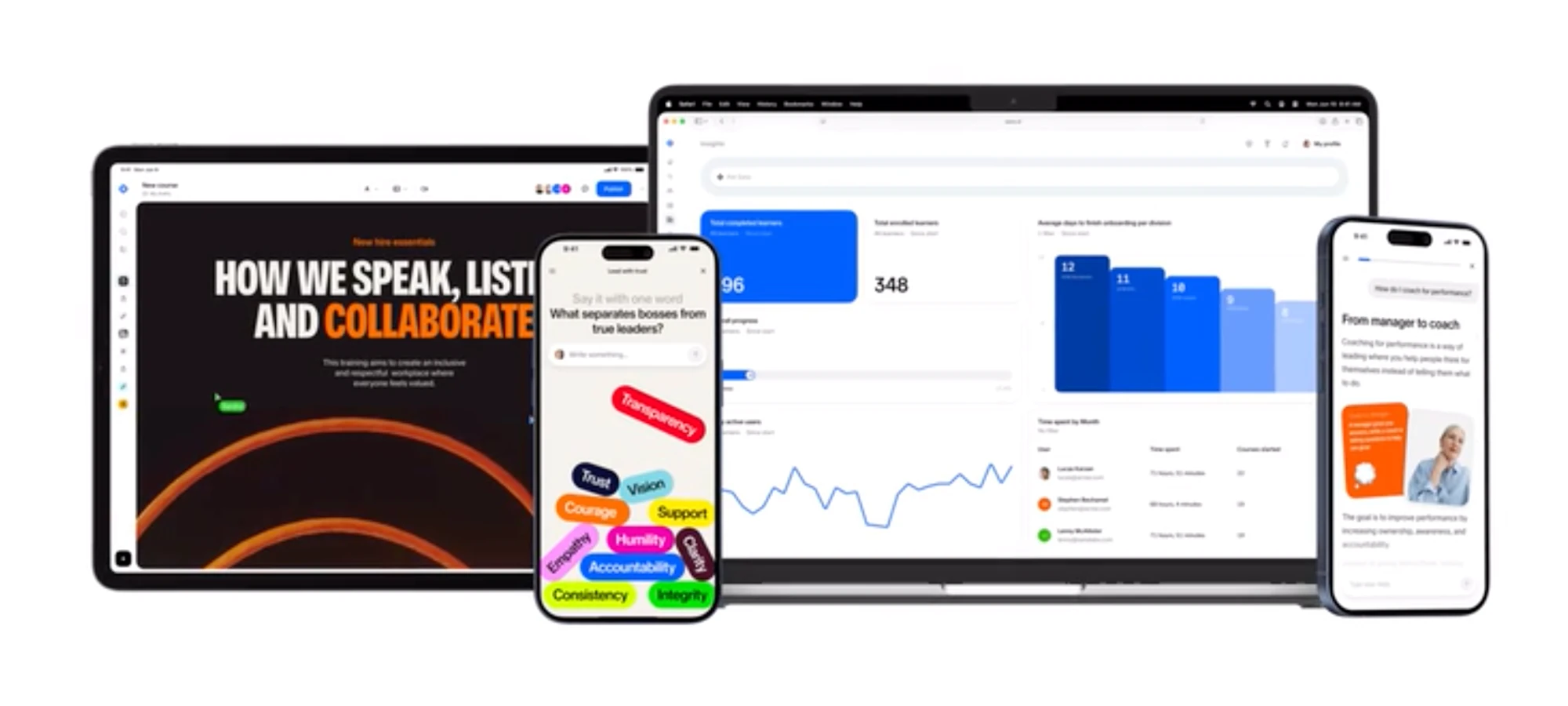
Context
In September 2025, Workday announced it was acquiring Sana, an AI company whose products included Sana Learn: an AI-native learning platform with course creation, personalised AI tutoring and learning agents.
Workday already had Workday Learning, the learning management system inside Workday HCM. It's where organisations assign training, run compliance, and report on who has learned what, connected to the same people data as the rest of HR.
The two products had different strengths. Sana Learn was built around the learner and the course creator, with AI at its core. Workday Learning was built around the organisation: governance, compliance and the system of record. The aim was to bring them together as one product, Workday Learning, powered by Sana.
The problem
Learning teams in large organisations often work with fragmented systems, manual workflows and generic courses that can't keep up with change. Employees put off training that doesn't feel relevant, and completion rates say little about whether anyone actually built a skill.
Combining the two products could address that, but only if it felt like one product. That was hard, because almost nothing about them matched:
- Two design languages. Each product had its own visual style, components and interaction patterns.
- Two teams. Workday and Sana designers had their own ways of working, tools and histories.
- Two very different products. One an AI-native experience for learners and creators, the other an enterprise system of record for administrators.
The challenge was to give learners, course creators and administrators Sana's AI-native experience, while keeping everything Workday customers rely on: their people and skills data, assignments, compliance tracking and reporting.
What I did
Leading one design team across two products
As Product Design Manager, I led designers across both the Workday Learning and Sana Learn teams. I set the design goals for the integration and led the team through the work, alongside product, engineering and solution architecture, so the design carried through to launch.
Part of the job was bringing two teams together around one product: a shared vision, a shared understanding of both products, and one way of making decisions.
Deciding what to keep, and how the products connect
The central design question was how to bring two distinct experiences together. That meant deciding, area by area, what to keep from each product and how the two would integrate, so the result felt like one product rather than two joined at the seams.
The vision rested on three ideas:
- AI-native and personalised: learning shaped around each person’s role, skills and goals.
- Enterprise-grade scale and governance: the compliance, reporting and controls Workday customers depend on.
- One seamless experience: one product for learners, creators and administrators, not two products side by side.
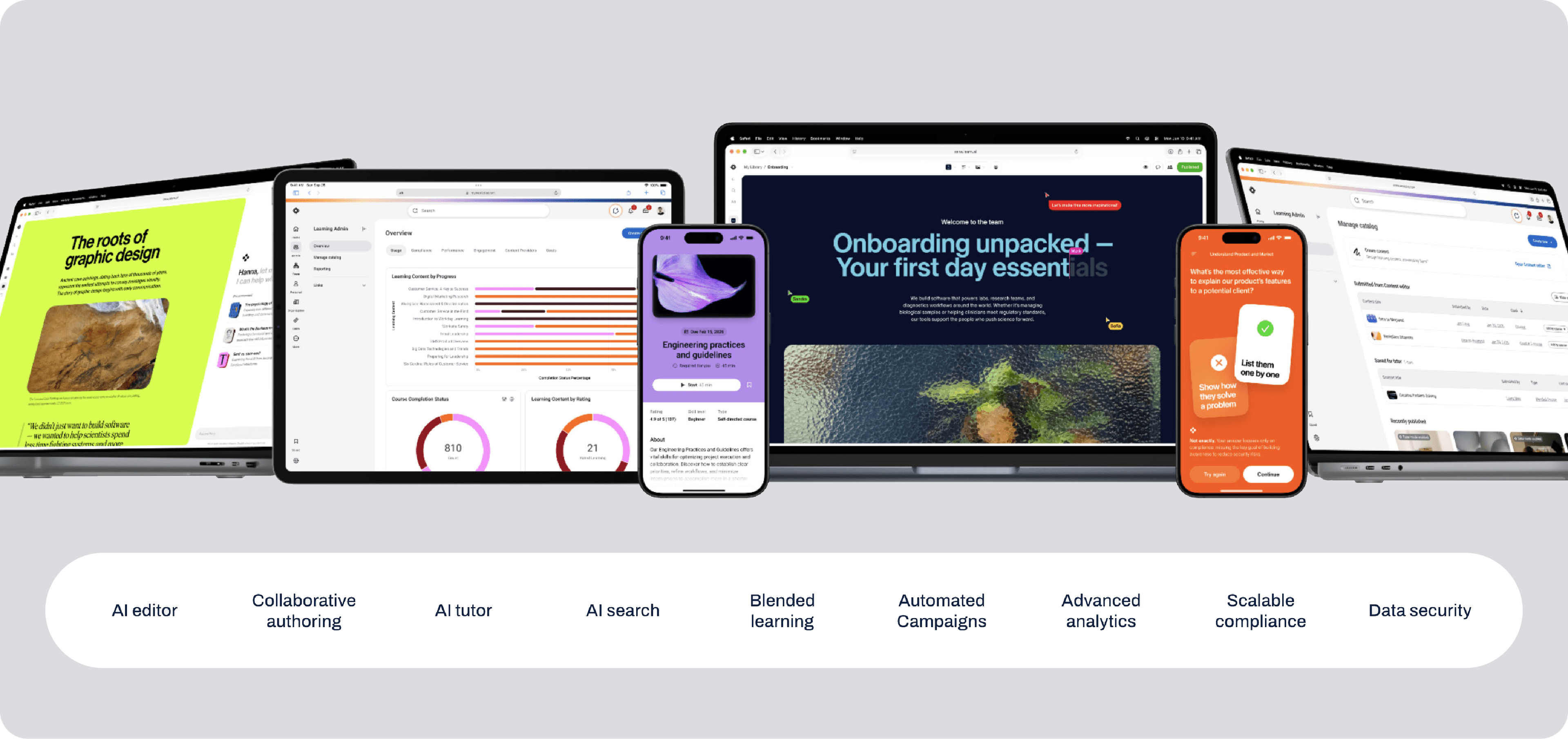
Designing for three audiences
The integrated product had to work for three groups of people, each with different needs:
- Learners: a personal AI tutor, learning paths for their current role and next step, and recommendations informed by their role, skills, organisation and location in Workday.
- Course creators: turning existing PDFs, presentations and courses into interactive courses, an AI editor and writing assistant, real-time collaboration, and translation into dozens of languages from one source.
- Administrators: one place to manage assignments, campaigns, reporting and controls for both Workday-native and Sana-created content, with learning paths that update when people join, change roles or move.
Outcome
Workday Learning, powered by Sana, became generally available on 22 July 2026, for Workday HCM customers worldwide. It brings Workday's people and skills data together with Sana's AI-native learning experience in one product.
Workday has published these results:
- 25% higher course completion for Workday's own learning team, using Sana Learn alongside Workday Learning with about 20,000 employees in 35 countries. Courses were also built 50% faster (Workday blog (opens in a new tab)).
- Up to 98% less time creating content, for organisations using the AI-powered authoring, from multi-week cycles to hours (Workday, July 2026 (opens in a new tab)).